Sealed: use the manufacturer expiry printed on the vial, typically two to three years from manufacture. Opened: 28 days at room temperature is the standard in-use window, and it is the number every label and every clinic protocol uses. The 28 days is not the point at which the water spoils. It is the point at which the preservative is no longer assumed to be doing its job against repeated needle entries.
The peptide dissolved in that water runs on a different and usually shorter clock, which is the part most guides skip.
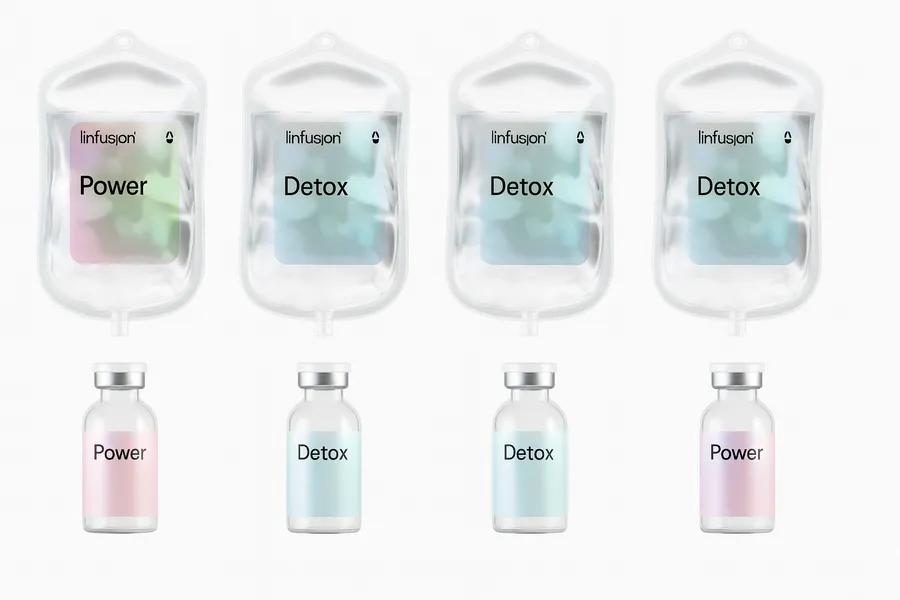
The chart
Every case, with the number that applies to it:
- Sealed vial, room temperature: manufacturer expiry on the label, commonly two to three years. Nothing to track beyond the printed date.
- Opened vial, room temperature: 28 days from first puncture. Write the date on the vial, not on your phone.
- Opened vial, refrigerated: still 28 days by convention. Refrigeration slows chemistry, and the 28 day window is about the preservative and repeated entries rather than about temperature.
- Sterile water for injection, opened: single use. No preservative, so once entered it is a one-draw product.
- Any vial with visible cloudiness, particles or a changed colour: discard regardless of date.
- A vial you cannot date because you did not write it down: discard. The date is the only information you have.
What the 28 days is protecting against
Bacteriostatic water is sterile water with benzyl alcohol, one of the antimicrobial preservatives used in multi-dose protein and peptide products.[1] The reason a multi-dose container carries a preservative at all is that the container gets entered more than once.[2]
Bacteriostatic is not sterilising. The word means suppressing microbial growth rather than killing organisms outright.[3] A preservative buys time against small contamination events. It does not clean up after a dirty needle.
Check the printed expiry before you open anything
The sealed date is a manufacturing shelf life. It applies to an unopened vial only, and it stops applying the moment the stopper is punctured.
Swab the stopper every single time
Handling practice is what drives contamination risk, which is why aseptic technique is where the interventions sit: work on improving compliance with aseptic non-touch technique is where measurable reductions in healthcare-associated infection have come from.[4] The alcohol swab is doing more work than the preservative is.
Write the open date on the vial
On the vial itself, in permanent marker. A 28 day window you cannot verify is not a window.
Use a fresh needle for every draw
Each entry is an independent contamination opportunity. The preservative is sized for occasional small challenges, not for repeated ones.
Discard at 28 days, or earlier on any visible change
Cloudiness, floaters or discolouration end the vial regardless of the calendar.
The 28 days is about how many times the stopper was entered, not about the water going off.
Where the 28 day number comes from
It is a convention derived from how preservatives are tested, not a measurement of when a specific vial fails.
Preservative efficacy is established by challenge testing: deliberately inoculating a product with microbial isolates and measuring survival over time.[5] A product that passes is declared preserved for a defined in-use period. The 28 days is that period applied conservatively across an entire product class.
The real-world number is longer. Refrigerated multi-dose insulin vials remained sterile through six months of use in a published study.[6]
6 months how long refrigerated multi-dose insulin vials stayed sterile in actual use PMID 37559404
Read that carefully. Six months of sterility in a commercial preserved formulation, handled in a clinical setting, is an upper bound on what careful technique can achieve. It is not a licence to run a home vial for six months, and it says nothing about whether the drug inside was still potent.
Can you freeze bacteriostatic water?
You can freeze the water. You should not freeze a vial with peptide already dissolved in it. Freezing induces protein aggregation, driven in part by a pH shift as the solution concentrates during ice formation.[7] The water survives. The peptide is what you damage.
Does bacteriostatic water need refrigeration?
Not before it is used with anything. Store sealed vials at room temperature, out of direct light. Once a peptide is dissolved in it, refrigerate, because from that point you are storing the peptide rather than the water.
The peptide’s clock is the shorter one
This is the distinction that matters and the one the 28 day rule obscures.
The water’s clock is microbiological. It runs on preservative capacity and how often the vial was entered.
The peptide’s clock is chemical. Peptides in solution degrade by their own routes, and deamidation was pinned down as the main one decades ago in growth hormone releasing factor analogues in neutral aqueous solution.[8] That clock runs whether or not anything ever contaminated the vial.
Conditions move it. A 2025 study measured solution-state degradation of semaglutide against pH, buffer, molarity and temperature, and all four changed the rate.[9]
And the preservative itself is not neutral toward the peptide. A 2022 study worked out the molecular mechanism by which antimicrobial excipients drive aggregation in parenteral peptide formulations.[10] The ingredient keeping the water clean is a documented aggregation trigger for what is dissolved in it.
The practical consequence: a vial can be perfectly sterile at day 28 and hold peptide that has been degrading since day one. Sterility and potency are two different questions and only the first one has a number.
What nobody can tell you
Two honest gaps:
- No published stability study covers most research peptides in bacteriostatic water. Shelf life is measured compound by compound, and for the compounds sold for research use those studies do not exist. Any specific figure you see quoted for a research peptide is an extrapolation.
- Deamidation rate depends on sequence. A stability number for one peptide carries no information about another, so a chart that gives one shelf life for all peptides is guessing.
The 28 days is a real, useful, conservative number for the water. Treat it as the ceiling for the vial and assume the peptide inside has a shorter one.
This article is for research and informational purposes only and is not intended to diagnose, treat, cure, or prevent any disease. The peptides discussed here are sold for research use only and are not for human consumption. Nothing in this article constitutes medical advice. Consult a qualified clinician before making changes to a health, training, or supplementation protocol.
References
- Antimicrobial Preservatives for Protein and Peptide Formulations: An Overview.. Pharmaceutics, 2023.
- Antimicrobial preservative use in parenteral products: past and present.. Journal of pharmaceutical sciences, 2007.
- Bacteriostatic versus bactericidal antibiotics for patients with serious bacterial infections: systematic review and meta-analysis.. The Journal of antimicrobial chemotherapy, 2015.
- Reducing healthcare-associated infections by improving compliance to aseptic non-touch technique in intravenous line maintenance: a quality improvement approach.. BMJ open quality, 2021.
- Preservative Efficacy Testing of Refrigerated Pharmaceuticals: Choice of Challenging Isolate and Storage Temperature.. PDA journal of pharmaceutical science and technology, 2025.
- Refrigerated multi-dose insulin vials remain sterile through 6 months of use.. The Journal of small animal practice, 2023.
- Freezing-induced protein aggregation - Role of pH shift and potential mitigation strategies.. Journal of controlled release : official journal of the Controlled Release Society, 2020.
- Degradation of growth hormone releasing factor analogs in neutral aqueous solution is related to deamidation of asparagine residues. Replacement of asparagine residues by serine stabilizes.. International journal of peptide and protein research, 1991.
- Effect of pH, buffers, molarity, and temperature on solution state degradation of semaglutide using LC-HRMS: A preformulation protocol for peptide drug delivery.. European journal of pharmaceutics and biopharmaceutics : official journal of Arbeitsgemeinschaft fur Pharmazeutische Verfahrenstechnik e.V, 2025.
- Molecular Mechanism of Antimicrobial Excipient-Induced Aggregation in Parenteral Formulations of Peptide Therapeutics.. Molecular pharmaceutics, 2022.