Epitalon is a synthetic four-amino-acid peptide, sold across the peptide research market as a telomere-lengthening longevity compound derived from the pineal gland. The single most useful thing to know going in: the compound’s two headline claims, that it extends human lifespan and that it lengthens telomeres, rest on two different bodies of evidence. Only one of them was ever tested in a living person. The mortality data is real. The telomere story is a fibroblast in a dish.
What the human mortality trial tested
The number cited most often for epitalon’s life-extension case is not about epitalon.
In a published study, elderly participants who received a multi-year course of Epithalamin, the natural pineal peptide extract that the synthetic tetrapeptide Epitalon was later built to mimic, showed markedly lower overall mortality (roughly 1.6- to 1.8-fold lower, and up to 4.1-fold lower when combined with the thymic peptide Thymalin) over 6 to 8 years of follow-up compared with untreated participants.[1] The trial followed 266 elderly people in total, split into groups given Thymalin alone, Epithalamin alone, both together, or neither. Epithalamin and Epitalon are related but not identical, and this mortality data was never collected on the synthetic peptide sold today.
4.1x lower mortality over 6 years in elderly patients given both peptide bioregulators annually, versus untreated controls PMID 14523363
The pattern held across every treatment arm in that study.
Mortality reduction vs untreated controls, by treatment group
- Epithalamin alone: 1.8
- Thymalin alone: 2.1
- Both, single course: 2.5
- Both, annually for 6 years: 4.1
Khavinson and Morozov, 266 elderly participants followed 6 to 8 years.
The compound-name problem: every number above describes Epithalamin, a natural pineal extract, and Thymalin, a thymic extract. Neither is the synthetic tetrapeptide Epitalon that peptide vendors sell today.
Much of the published epitalon research, including its core mechanistic and gene-expression studies, comes from the same Russian research group, led by Vladimir Khavinson.[2] That is not automatically a mark against the findings. It is a reason to want a second lab’s name attached before treating any of it as settled. This kind of conflation, a real mechanistic finding from one research program stretched past what it was tested for, is common across natural peptides marketed on partial human evidence.
The telomere claim: a fibroblast dish, not a person
Here is the mechanism the marketing leans on: epitalon reactivates telomerase, the enzyme that rebuilds the protective caps on the ends of chromosomes, and by doing so extends cellular lifespan.
The finding is real. It was never demonstrated in a living human.
In the founding paper, Khavinson’s group added Epithalon peptide to telomerase-negative human fetal fibroblast cultures grown in the lab.[3] The peptide induced expression of the telomerase catalytic subunit, measurable enzymatic activity, and telomere elongation in that culture. That is a genuine, specific result, but it happened in a dish of cells rather than in a patient who received a course of injections.
No biopsy from a treated human has ever shown the same thing. The word “somatic” in this paper’s title, “human somatic cells,” describes cells in a flask, not tissue removed from a person who took the peptide.
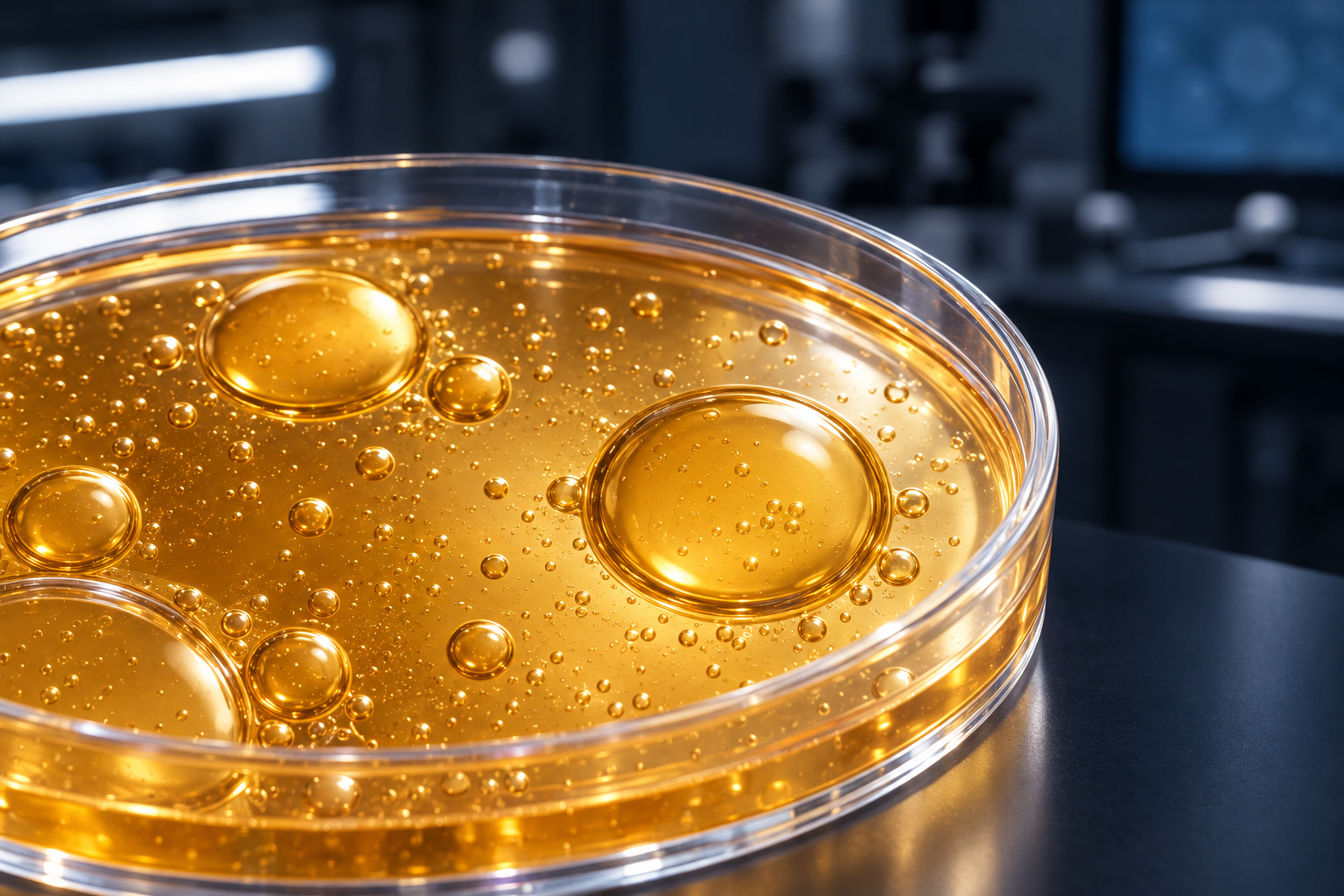
The telomerase finding lives in the dish on the left. Nobody has moved it to the room on the right.
A 2025 replication, and a new wrinkle about cancer cells
For roughly twenty years, the telomerase finding sat unreplicated outside Khavinson’s own lab. In 2025, an independent group finally tested it.[4]
Al-Dulaimi and colleagues treated normal human epithelial and fibroblast cells, plus two breast cancer cell lines (21NT and BT474), with epitalon. The result in normal cells matched the original claim: dose-dependent telomere extension, driven by increased hTERT expression and telomerase activity.
The cancer cells told a different story. Their telomeres lengthened too, but mostly through a separate mechanism called ALT, Alternative Lengthening of Telomeres, that stayed largely inactive in the normal cells. ALT is one of the two pathways cancer cells use to become effectively immortal.
Bottom line: the 2025 replication is good news for the original telomerase claim, and it surfaces a caution nobody in the epitalon marketing literature mentions. In cancer cell lines, the same peptide activated a telomere-lengthening pathway specifically associated with tumor immortalization.
This doesn’t mean epitalon causes cancer. It means the compound’s core selling point, more telomere length, is not an unambiguous good in every cell type, and the people selling it have not grappled with that in public.
Mechanism: what’s established, and what’s still a hypothesis
Epitalon, also called Epithalon, is a four-amino-acid peptide, Ala-Glu-Asp-Gly (AEDG), shown to affect pineal gland, retinal, and brain function.[2] That structural and functional claim is well established.
What’s still hypothesis is the leap from there to whole-body aging. The idea that epitalon restores age-related declines in pineal melatonin secretion, and that this cascades into the broader health benefits attributed to it, is an extension from cell-culture and animal findings. It has not been demonstrated directly in aging human tissue.
What the animal cancer data shows, and does not show
The closest thing to a cancer safety study for epitalon is not a human trial. It is a rat experiment.
The clearest cancer-relevant safety data for epitalon comes from a rat model rather than a human trial, where rats given Epitalon throughout six months of chemically induced colon carcinogenesis showed inhibited tumor-cell proliferation and increased apoptosis in colon tumors compared with untreated rats.[5] The carcinogen was DMH, given by injection to induce the tumors; the Epitalon dose in the treated group was 1 microgram, five times a week, for the full six months.
That is a favorable result, and it is also a rat model of one cancer type, run by researchers overlapping with Khavinson’s group, using a synthetic-carcinogen protocol that has nothing to do with the ALT activation seen in the 2025 human cell line study above. Neither experiment answers the other’s question. Nobody has tried to connect them.
Where it fits against melatonin
Epitalon’s proposed mechanism runs partly through restoring melatonin secretion in aging pineal tissue. Melatonin itself has been tested far beyond anything in the epitalon literature: a systematic review and meta-analysis of 23 randomized, placebo-controlled trials found it significantly improved sleep quality.[6]
That is the scale of replication epitalon’s own aging claims have never approached. One compound has two dozen independent trials behind a single outcome. The other has one research group’s elderly cohort and one research group’s cell cultures, replicated exactly once.
The pattern isn’t unique to epitalon. GHK-Cu’s evidence is strong in the one place it has been tested repeatedly, topical skin application, and thin everywhere else it gets marketed. Epitalon’s version of that gap is a research chemical with one real mortality trial, for a related but different compound, and one real cell-culture trial, independently replicated once, stretched to cover claims about human longevity that neither trial was designed to test.
What would confirm this
No published trial establishes a dosing schedule for the synthetic tetrapeptide people buy today. The clinical courses in the literature belong to Epithalamin and Thymalin rather than Epitalon itself, and the regimens circulating in peptide forums are not derived from a study of either compound at the doses and durations being sold.
What would move this forward:
- A human trial of the actual synthetic peptide. Epitalon itself, rather than Epithalamin or Thymalin, at a stated dose, in a stated population, against placebo.
- A second independent replication of the telomerase finding, ideally in a normal, non-immortalized tissue type rather than a mix that includes cancer cell lines.
- Any human data on the cancer-cell ALT activation question, even a cell-culture follow-up narrowing whether the effect scales with dose the way the normal-cell telomerase effect does.
None of that exists yet. Until it does, the mortality number belongs to a different compound, and the telomere number belongs to a dish.
This article is for research and informational purposes only and is not intended to diagnose, treat, cure, or prevent any disease. The peptides discussed here are sold for research use only and are not for human consumption. Nothing in this article constitutes medical advice. Consult a qualified clinician before making changes to a health, training, or supplementation protocol.
References
- Peptides of pineal gland and thymus prolong human life.. Neuro endocrinology letters, 2003.
- AEDG Peptide (Epitalon) Stimulates Gene Expression and Protein Synthesis during Neurogenesis: Possible Epigenetic Mechanism.. Molecules (Basel, Switzerland), 2020.
- Epithalon peptide induces telomerase activity and telomere elongation in human somatic cells.. Bulletin of experimental biology and medicine, 2003.
- Epitalon increases telomere length in human cell lines through telomerase upregulation or ALT activity.. Biogerontology, 2025.
- Epitalon and colon carcinogenesis in rats: proliferative activity and apoptosis in colon tumors and mucosa.. International journal of molecular medicine, 2003.
- Effect of melatonin supplementation on sleep quality: a systematic review and meta-analysis of randomized controlled trials.. Journal of neurology, 2022.