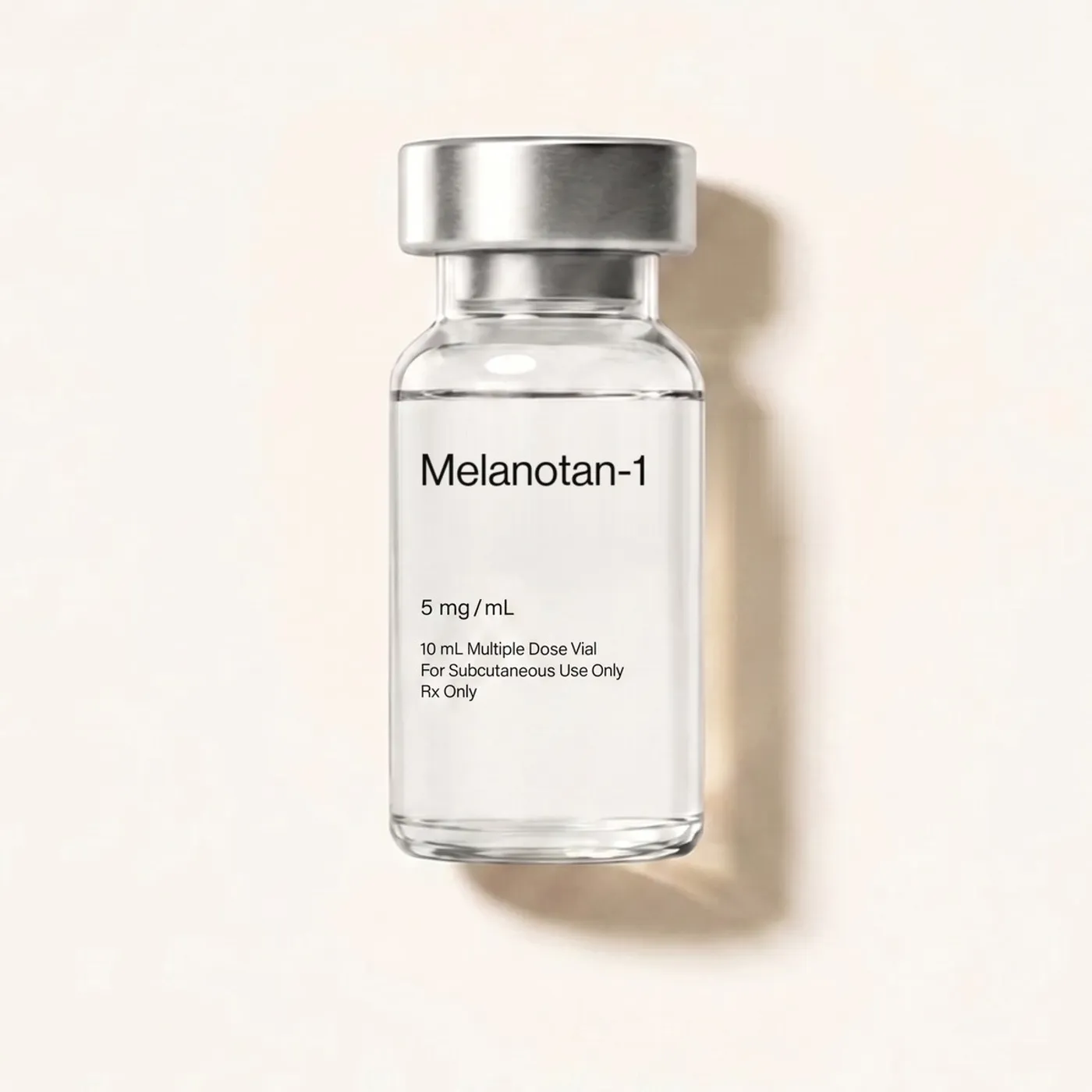
Melanotan-1
Melanotan-1 is the compound behind afamelanotide, which holds marketing authorisation as Scenesse for a rare light-sensitivity condition and is...
About:
An alpha-MSH analogue approved as afamelanotide for erythropoietic protoporphyria and sold separately as a tanning peptide.
What does this peptide do?
Backed by human trial data, narrower than the strongest evidence. Research focuses on erythropoietic protoporphyria and tanning.
Erythropoietic protoporphyria
Approved as afamelanotide for erythropoietic protoporphyria.
Tanning
Sold separately, unlicensed, as a tanning peptide.
Evidence grade
 B
BHighest evidence grade among the graded claims: B. Grades reflect study strength, not benefit.
What are the benefits and side effects of this peptide
What research says it may help with
- Randomized studies support light tolerance outcomes there.
Who should avoid it
- People who are pregnant or breastfeeding
- Children and adolescents
- People with many moles or a history of skin cancer
- Known hypersensitivity to peptide preparations
- Personal or family history of melanoma or atypical moles
See the safety section. Absence of a flag is not evidence of safety.
A grade reflects evidence strength, not a recommendation to use this compound; a strong grade can attach to a harmful effect.

How to store this peptide
The licensed form is a controlled-release implant placed by a clinician. Research-market powder is perishable once reconstituted and requires refrigeration and clean handling.
Lyophilized storage
Refrigerate at 2–8 °C in the original carton. Do not freeze.
Reconstituted storage
Once in use, may be kept below 30 °C for the period stated on the product label.
Storage Handling
Protect from light. Do not use if it has been frozen.
Related research
Related research is coming soon for this peptide.
Related peptides
 Skin & Anti-Aging
GHK-Cu
Copper peptide researched for skin regeneration, collagen, and wound healing.
 Skin & Anti-Aging
Melanotan-2
Melanotan-2 is unlicensed in every jurisdiction we checked. Verified literature places it among melanocortin receptor agonists and documents its...
 Skin & Anti-Aging
Argireline
Argireline has more evidence behind it than most cosmetic peptides: controlled studies measuring wrinkle endpoints, a pilot clinical study, and...