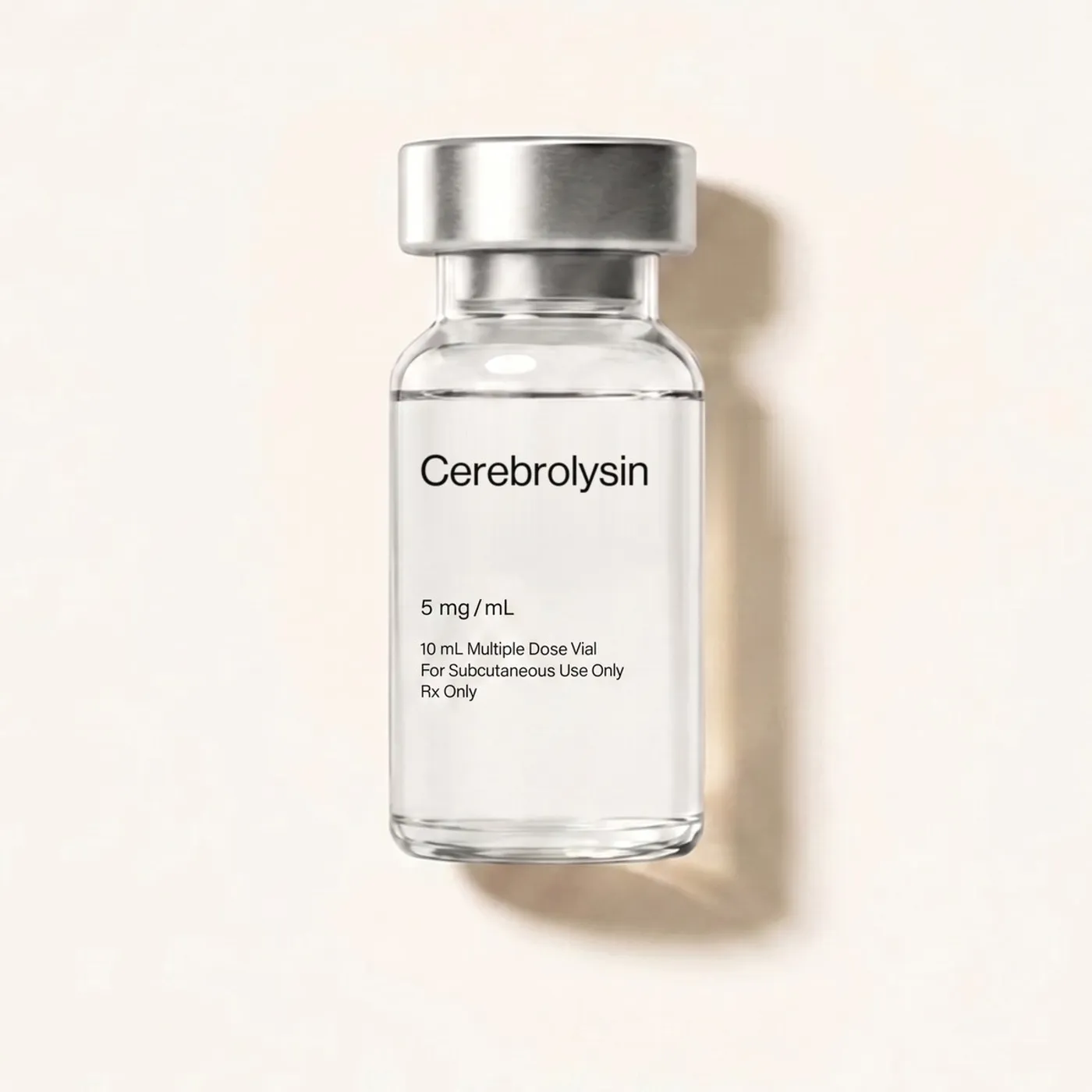
Cerebrolysin
Cerebrolysin has a substantial trial literature across stroke and dementia, assessed in multiple systematic reviews, pooled analyses and European...
About:
A porcine brain-derived peptide preparation used in some countries for stroke and dementia, with contested trial evidence.
What does this peptide do?
Supported by randomised human trials. Research focuses on stroke and dementia.

Stroke research
Used in some countries for stroke, with contested trial evidence.

Dementia research
Also used for dementia, with contested trial evidence.
Evidence grade
 A
AHighest evidence grade among the graded claims: A. Grades reflect study strength, not benefit.
What are the benefits and side effects of this peptide
What research says it may help with
- Cerebrolysin has a substantial trial literature across stroke and dementia, assessed in multiple systematic reviews, pooled analyses and European guidelines.
Who should avoid it
- People who are pregnant or breastfeeding
- Children outside supervised clinical use
- Known hypersensitivity to the preparation
- Severe kidney impairment
- Epilepsy, given reports of seizure activity
See the safety section. Absence of a flag is not evidence of safety.
A grade reflects evidence strength, not a recommendation to use this compound; a strong grade can attach to a harmful effect.

How to store this peptide
Supplied as an ampoule solution in markets where it is licensed. Protect from light and do not use if the solution is discoloured.
Lyophilized storage
Refrigerate at 2–8 °C in the original carton. Do not freeze.
Reconstituted storage
Once in use, may be kept below 30 °C for the period stated on the product label.
Storage Handling
Protect from light. Do not use if it has been frozen.
Related research
Related research is coming soon for this peptide.
Related peptides
 Nootropic
Selank
Two small Russian randomized trials exist: one compared Selank with medazepam in generalized anxiety disorder, and one added Selank to phenazepam...
 Nootropic
Semax
Human data comes from Russian stroke research: one clinical study followed 110 patients after ischemic stroke, without a randomized controlled...
 Nootropic
Noopept
Everything we verified for noopept is preclinical: cognitive measures in rats, neurotrophic factor expression in rat hippocampus, and mechanistic...