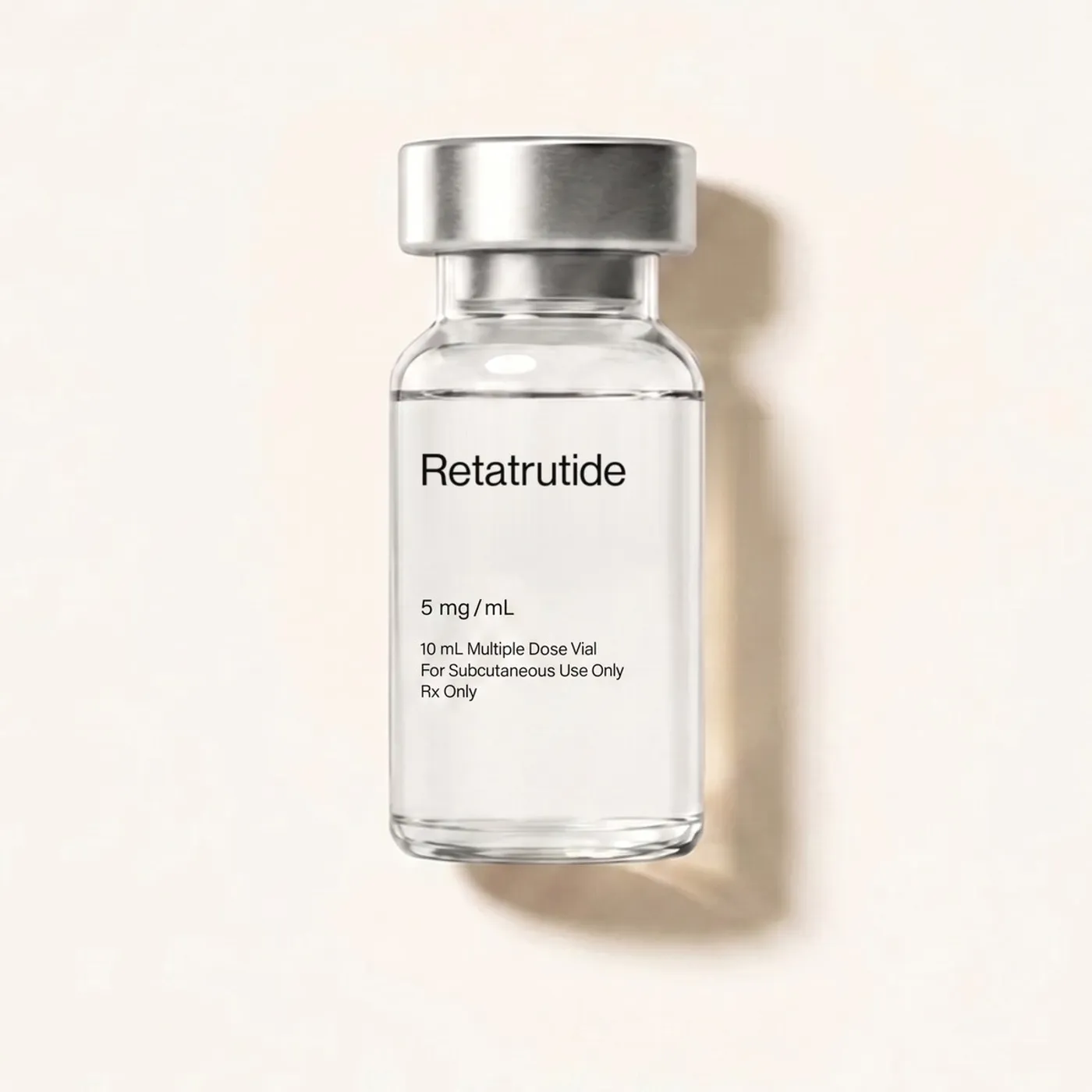
Retatrutide
Triple-receptor agonist explored for next-generation weight management research.
About:
Retatrutide is a triple-receptor agonist targeting GIP, GLP-1, and glucagon pathways simultaneously. It represents a newer direction in metabolic peptide research aimed at amplifying weight-management effects.
Evidence-stage correction, October 25, 2026: the previous "not yet phase 3" statement was outdated.
What is Retatrutide?
Retatrutide has reached phase 3 research. Lilly reports TRIUMPH-2 findings in adults with overweight or obesity and type 2 diabetes. Phase 3 research is not FDA approval: FDA says retatrutide is not a component of an approved drug. This is a study-stage correction, not a complete clinical review.
Sources and limits: Lilly's September 30, 2026 sponsor presentation reports TRIUMPH-2; FDA supplies the U.S. regulatory position. The underlying journal papers were not independently accessible in this check. Historical claims and grades elsewhere on this page have not received a new clinical review. [1] Lilly report | [2] FDA statement
This correction is for informational purposes only and is not intended to diagnose, treat, cure, or prevent any disease. It is not medical advice or a recommendation to use or compound a medicine.
What does this peptide do?
Early studies investigate how engaging three receptors influences fat loss and energy expenditure compared with established GLP-1 therapies. The molecule is a frequent point of comparison in fat-loss research.

Weight research
Phase 3 TRIUMPH-2 research includes adults with overweight or obesity and type 2 diabetes.

Metabolic pathways
Engages GIP, GLP-1 and glucagon receptors at once.
Evidence grade
 A
Highest evidence grade among the graded claims: A. Grades reflect study strength, not benefit.
What are the benefits and side effects of this peptide
What research says it may help with
- Retatrutide has reached phase 3 research. Lilly reports TRIUMPH-2 findings in adults with overweight or obesity and type 2 diabetes.
- The population, formulation and outcome matter when interpreting a trial result.
- Phase 3 research does not establish FDA approval or the quality of an online product.
Who should avoid it
- People who are pregnant
- People who are breastfeeding
- Children and adolescents
- People with unmonitored diabetes
- People with a history of thyroid C-cell tumors
See the safety section. Absence of a flag is not evidence of safety.
A grade reflects evidence strength, not a recommendation to use this compound; a strong grade can attach to a harmful effect.

How to store this peptide
Retatrutide is typically handled as a peptide requiring refrigerated storage before use, with protection from light and heat. Reconstituted or drawn doses are treated as single-use and require sterile technique to avoid contamination. Any change in color, clarity, or particulate matter should be treated as a reason to discard the material.
Lyophilized storage
Store at −20 °C, protected from light.
Reconstituted storage
Keep at 2–8 °C and use within a short period. For longer storage, aliquot and freeze at −20 °C.
Storage Handling
Avoid repeated freeze–thaw cycles. Let the vial reach room temperature before opening.
Draw the exact dose, every time
Related research
Peptide research hub
Best peptides for weight loss: only a few have real trials
Peptide research hub
Retatrutide and sleep: what the apnea trials measured
Peptide research hub
Retatrutide Plateau: The Trial Curve Kept Climbing Past 48 Weeks
Peptide research hub
Retatrutide and alcohol: trials, cohorts and evidence limits
Related peptides
 Metabolic
Tirzepatide
Dual GIP/GLP-1 receptor agonist studied for weight management and glucose control.
 Metabolic
Semaglutide
GLP-1 receptor agonist researched for appetite regulation and metabolic health.
 Metabolic
AICAR
AICAR is one of the most used laboratory activators of AMPK, and that identity is well documented in a systematic review. Disease model evidence,...