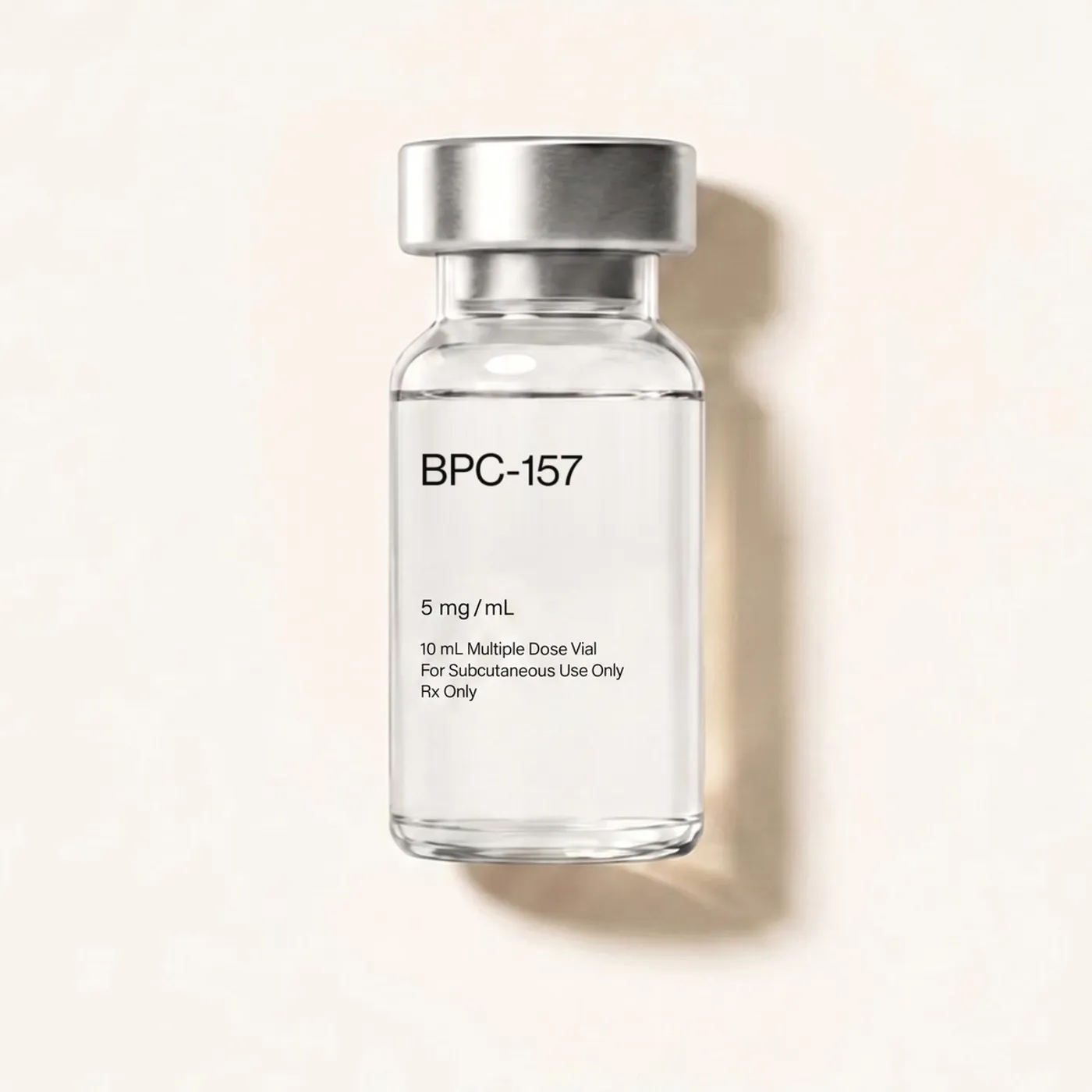
BPC-157
Body-protective compound studied for tissue repair, gut health, and recovery.
About:
BPC-157 is a body-protective compound derived from a gastric protein, studied extensively for its potential role in tissue repair, gut health, and recovery. It is one of the most discussed peptides in regenerative research.
What does this peptide do?
Investigations span tendon and ligament healing, gastrointestinal protection, and angiogenesis. Researchers also examine questions of oral bioavailability, dosing protocols, and observed safety in preclinical models.
Tissue repair
Rodent studies report effects on tendon and tissue healing.

Gut health
Investigated for gastrointestinal protection in animal models.
Recovery
Human evidence is limited to small uncontrolled pilot studies.
Evidence grade
 C
CHighest evidence grade among the graded claims: C. Grades reflect study strength, not benefit.
What are the benefits and side effects of this peptide
What research says it may help with
- Studied mainly in rodent models, with reported effects on tendon and tissue healing and angiogenesis-related signaling pathways.
- No randomized controlled trials in humans have been published to date.
Who should avoid it
- People who are pregnant or breastfeeding
- Children and adolescents
- People with a personal or family history of cancer
- People with an untreated bleeding disorder
- Active or suspected malignancy, since studied mechanisms involve angiogenesis and cell proliferation pathways
See the safety section. Absence of a flag is not evidence of safety.
A grade reflects evidence strength, not a recommendation to use this compound; a strong grade can attach to a harmful effect.

How to store this peptide
Typically supplied as a lyophilized peptide requiring refrigeration or freezing before reconstitution, with the reconstituted solution kept refrigerated and used within a limited window. Products from unregulated compounding sources have not been evaluated for sterility or purity.
Lyophilized storage
Store at −20 °C, protected from light.
Reconstituted storage
Keep at 2–8 °C and use within a short period. For longer storage, aliquot and freeze at −20 °C.
Storage Handling
Avoid repeated freeze–thaw cycles. Let the vial reach room temperature before opening.
Draw the exact dose, every time
Related research
Peptide research hub
BPC-157: What It Is and How Researchers Use It
Peptide research hub
BPC-157 Oral Bioavailability: Myth vs. Evidence
Peptide research hub
BPC-157 Side Effects: The Safety Data Nobody Has
Peptide research hub
BPC-157 Results: Rat Data, Human Expectations
Peptide research hub
BPC-157 Before and After: Reports vs Trial Findings
Peptide research hub
Is BPC-157 Legal? The Regulatory Position
Peptide research hub
BPC-157: Decades of Rat Data, Zero Human Trials
Peptide research hub
TB-500 vs BPC-157: Which Has the Better Evidence
Related peptides
 Recovery
TB-500
Thymosin beta-4 fragment explored for flexibility and tissue repair.
 Recovery
KPV
All verified evidence is preclinical: KPV reduced intestinal inflammation in mouse models of colitis, entered cells through the PepT1 transporter...
 Recovery
ARA-290
ARA-290 has genuine randomized human trials, all in sarcoidosis patients with small fibre neuropathy, where it improved symptom scores and corneal...